Desert caliche and valley fill in Tempe create tricky drainage conditions. The city sits at 1,184 feet elevation with less than 9 inches of rain a year. That sounds dry. But when monsoon storms hit the Salt River basin, flash flooding becomes real. Infiltration rates vary wildly across the basin. You cannot guess. We run field permeability tests to get actual numbers. Lefranc for soil. Lugeon for rock. The data feeds into retention basin design and stormwater compliance per ASCE 7 and local IBC amendments. Before signing off on a grading plan, contractors often pair this data with a test pit program to visually log the caliche layers that cap much of Tempe's subsurface.
Caliche fractures can transmit water 100 times faster than intact matrix. Lab tests alone won't catch it.
Scope of work in Tempe Arizona
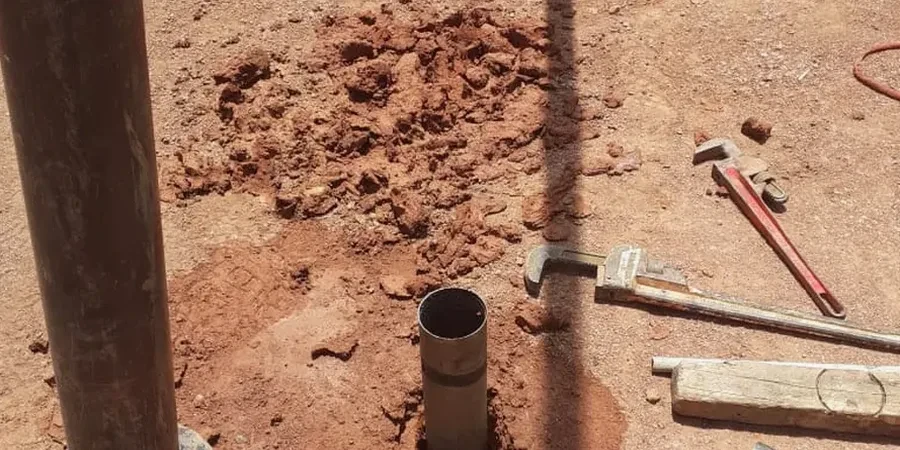
The results pin down hydraulic conductivity where lab tests fail. Disturbed samples miss the fractures. Field testing captures them. On a recent project near Arizona Mills, the CPT data showed high silt content. But the Lefranc result was 10x higher than expected. Reason? Thin sand stringers the CPT tip missed. That level of detail saves a detention basin design.
Risks and considerations in Tempe Arizona
North Tempe near Papago Park has shallow granite. South Tempe toward Guadalupe sits on deep basin fill. Two different worlds for permeability. Granite weathering controls Lugeon values in the north. A few open joints can mean 20 Lugeon units or more. That's a grouting trigger if you're building a cutoff wall. In the south, the fine-grained basin fill often yields k values below 10⁻⁵ cm/s. Seems tight. But a perched water table during monsoons changes everything. We've measured pore pressure buildup in silt lenses that the geotech report didn't flag. Skipping field permeability here leads to heave in excavations and failed infiltration trenches. The IBC requires site-specific hydraulic conductivity for stormwater management. No shortcuts.
Our services
We offer three core testing packages for Tempe projects. Each includes field mobilization, testing, data reduction, and a stamped report.
Lefranc borehole testing
Constant-head or falling-head test in soil. We advance the borehole, install the slotted casing, and run the test at specified intervals. Used for infiltration galleries and retention basins.
Lugeon packer testing
Single or double packer setup for rock. Five pressure stages per interval. We measure flow vs. pressure to characterize fracture flow. Standard for dam foundations and deep excavations.
Dewatering permeability assessment
Combined Lefranc and pump test correlation. We deliver the hydraulic conductivity profile needed to size well points and estimate pumping rates for construction dewatering.
Quick answers
How much does a field permeability test cost in Tempe?
Budget between US$660 and US$1,160 per test interval. The final number depends on depth, access, and whether we run Lefranc or Lugeon. A Lugeon test with packer setup runs higher. Mobilization to sites south of the US-60 or north near Papago Park is included in our flat rate.
Do I need Lefranc or Lugeon for my Tempe project?
If you're in soil above the caliche or in basin fill, Lefranc is the standard. If you hit granite or cemented caliche that drills like rock, we switch to Lugeon. We often run both in the same borehole. Soil zone gets Lefranc. Rock zone gets Lugeon.
How long does it take to get results?
Fieldwork usually completes in one day for up to three intervals. The report with hydraulic conductivity values and Lugeon curves is ready in 3 to 4 business days. Rush turnaround is available for active construction sites.