Working in Tempe, the difference between a site near Hayden Butte and one down in the Kyrene floodplain is night and day. You’ve got residual granite and cemented alluvium on the slopes versus deep, compressible silts and clays in the basin. That contrast determines everything about your cut and fill strategy. We’ve run slope stability analysis across both conditions and the failure modes are completely different. Near the butte, wedge sliding controls the design. In the floodplain, it’s all about rapid drawdown and low shear strength in saturated zones. Before you commit to a grading plan, a test pit program gives us the visual confirmation we need on these transitions.
Caliche layers in Tempe create perched water and false refusal—skip the CPT pore pressure dissipation test and your factor of safety is just a guess.
Scope of work in Tempe Arizona
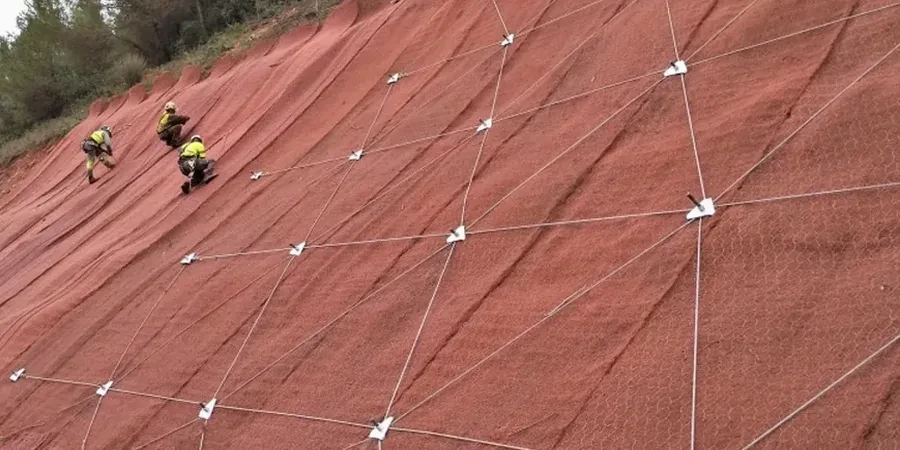
Risks and considerations in Tempe Arizona
Tempe sits in a moderate seismic hazard zone with a predictable monsoon season that dumps intense, short-duration rain on hydrophobic desert soils. The combination is what gets you. In Papago Park and around Tempe Butte, we see block falls and wedge slides triggered by precipitation infiltrating tension cracks. In the basin, the risk shifts to rotational failures in clayey silts during excavation. The water table is often deep here, but don’t let that fool you. Irrigation overspray and canal seepage create localized perched zones that our in-situ permeability testing consistently picks up. A dry hole in June can be a wet hole in August. That seasonal shift is often the difference between a stable 1.3 factor of safety and a progressive failure.
Our services
A slope stability job in Tempe never stands alone. Here’s what we typically bundle to get a complete picture.
CPT and Shear Wave Profiling
We use CPT with pore pressure dissipation to map the exact depth to caliche and measure small-strain stiffness (Vs) for site-specific seismic response.
Laboratory Shear Strength Testing
Multi-stage CIU triaxial and direct shear on undisturbed samples to define the failure envelope, including post-peak softening behavior critical for progressive failure analysis.
Probabilistic Back-Analysis
For existing slopes, we calibrate our models using Monte Carlo simulation to understand which parameters truly control stability under monsoon conditions.
Quick answers
What is the cost of a slope stability analysis in Tempe?
A typical slope stability analysis in Tempe ranges from US$1,160 to US$3,990. The spread depends on whether we need a CPT rig for caliche refusal, lab triaxial testing, or just a desktop review using existing logs and published data.
How does caliche affect slope stability?
Caliche creates a false sense of security. It’s a hard, cemented layer but it’s brittle. It traps water above it, creating a perched water table. When that water builds up during a monsoon, the soil above loses suction and effective stress collapses. We’ve seen translational slides move on wetted clay seams just above the caliche contact.
Do I need a slope stability analysis for a single-family home in Tempe?
If your lot is on a hillside near Hayden Butte or requires a cut deeper than 6 feet, yes. The City of Tempe checks for this under IBC. Even a small retaining wall over 4 feet with a slope above needs a signed and sealed report confirming global stability.
How do you model seismic loading for Tempe slopes?
We use the pseudostatic method with a horizontal seismic coefficient (kh) selected per ASCE 7-22, based on Site Class and design spectral acceleration. For critical slopes, we run a Newmark sliding block analysis to estimate permanent displacement during the design earthquake, not just a factor of safety.