Pour a footing in the Kyrene corridor and you'll hit stiff, gravelly deposits that barely shift with the seasons. Drive ten minutes north toward the Salt River bottomlands near Papago Park, and the profile changes completely—loose silty sands, old channel fills, and groundwater within six feet. That contrast is exactly why shallow foundation design in Tempe can't rely on a generic bearing value pulled from a county map. The city sits on basin-fill alluvium deposited by the Salt River over millennia, with surface geology shifting block by block. Our lab runs the physical testing behind every bearing capacity calculation: Atterberg limits for clay lenses, grain size curves from grain size analysis to classify the material per ASTM D2487, and direct shear on undisturbed samples when we need friction angles for a spread footing on a sloped lot near ASU. Tempe's expansive clays aren't as notorious as north Phoenix, but they show up in pockets. We've pulled cores in the Broadway curve where the plasticity index jumped from 12 to 35 within three vertical feet. That kind of detail changes whether you're sizing a 24-inch-wide strip footing or jumping to a stiffened mat with grade beams. For sites with fill uncertainty, we often pair the lab program with a plate load test right at footing elevation so the geotech sees deformation behavior directly, not just through correlation tables. In the industrial lots west of Priest Drive, where decades of undocumented backfill sit under thin asphalt, that in-situ confirmation pays for itself before the first yard of concrete shows up.
Bearing capacity in Tempe is rarely about the soil failing in shear—it's almost always settlement that governs the design, especially on the silty layers below the crust.
Scope of work in Tempe Arizona
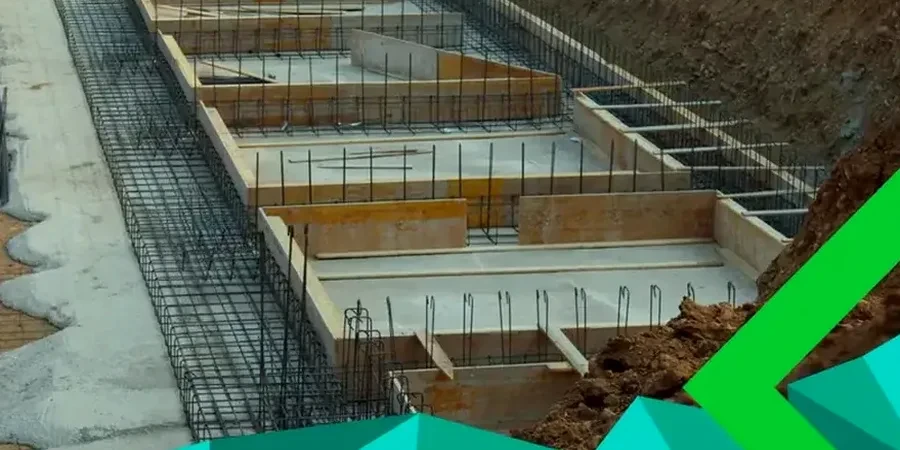
Risks and considerations in Tempe Arizona
In Tempe, many times we see foundation plans that look fine on paper until you check the historic irrigation map. The city's older neighborhoods, particularly around the Tempe Canal alignment and the old farm blocks south of Baseline, sit on land that saw flood irrigation for 80 years. That repeated wetting and drying created a near-surface layer of collapsible silt that loses structure fast when it gets wet again under a slab. A standard shallow foundation design that doesn't account for that collapse potential can lead to slab cracking within two monsoon seasons. The other risk is undocumented fill. Tempe saw a building boom in the 1970s and 80s that left behind deep, uncompacted fill in odd-shaped parcels, especially near older commercial strips. We flag these during the site reconnaissance and confirm with test pits or shallow borings. If we find fill thicker than a foot, we either undercut and recompact or switch to a deeper foundation element. The cost of fixing a settled footing in Tempe's post-construction market is brutal—cracked drywall, binding doors, and stucco repairs that run five figures. A thorough investigation upfront is cheap insurance.
Our services
Our shallow foundation design process in Tempe combines field investigation with a full-service geotechnical lab. We handle everything from the initial borehole layout to the final bearing capacity report sealed by an Arizona-registered engineer.
Bearing Capacity Analysis
We calculate allowable bearing pressures using shear strength data from triaxial or direct shear tests, checked against settlement limits from consolidation testing. Every analysis follows IBC allowable stress design methodology with a minimum factor of safety of 3.0.
Mat and Spread Footing Design
For sites with marginal soils or heavy column loads, we design rigid mats and reinforced strip footings. The lab provides subgrade modulus values from plate load tests and consolidation curves so the structural engineer has real stiffness numbers, not textbook defaults.
Soil Improvement for Footings
When the upper five feet won't meet bearing criteria, we design ground improvement—compacted structural fill, moisture conditioning, or stone columns. All specifications are tied to lab proctor and gradation results from the site's own material.
Quick answers
What does shallow foundation design cost for a typical Tempe residential lot?
For a standard single-family lot in Tempe, a complete shallow foundation investigation with one or two borings, lab testing, and a sealed report typically runs between US$2,170 and US$2,990. The final number depends on access, depth, and whether we need a drill rig or can use test pits.
How deep do footings need to be in Tempe?
The IBC requires a minimum of 18 inches below finished grade for exterior footings, but in Tempe we often go deeper—24 to 30 inches—to get below the desiccated crust and any old irrigation silt layers. The exact depth comes from the boring logs and lab moisture profiles.
Do you handle the structural design of the footing itself?
We offer the geotechnical parameters—bearing capacity, settlement estimates, subgrade modulus, and lateral earth pressures—that the structural engineer uses to design the concrete and reinforcement. Our seal covers the geotechnical recommendations; the structural design is by others.
What lab tests are required for a shallow foundation report?
At minimum, we run grain size distribution, Atterberg limits, and a Proctor compaction test. Most Tempe projects also need direct shear or triaxial testing for strength parameters, consolidation testing if settlement is a concern, and sulfate testing to specify the right cement type for the concrete.