Drive through the neighborhoods north of Tempe Town Lake and you’ll see homes built on sandy alluvium that drains almost too well. Head south toward the Kyrene corridor and the ground shifts—more clay, more heave, more phone calls to our lab asking why slab cracks keep coming back. We deal with both realities. A raft foundation design in Tempe has to account for this patchwork geology, and that’s where a proper subsurface investigation makes the difference between a slab that floats and one that fights the soil. When the stratigraphy gets unpredictable, we often combine our borehole data with a CPT test to catch thin soft seams that standard sampling misses, especially near the Salt River floodplain where buried channel deposits can ruin a uniform bearing assumption.
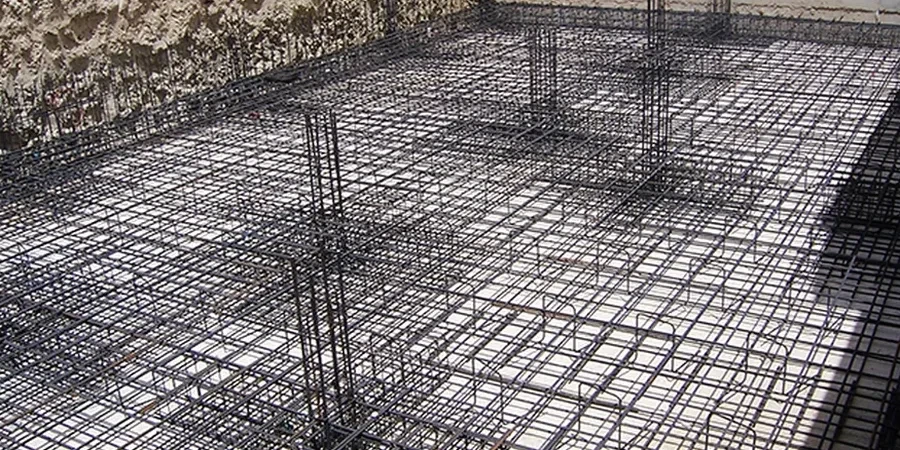
A mat foundation in Tempe doesn't just carry load—it has to ride out seasonal volume change in clay that can lift a corner an inch between July and September.
Scope of work in Tempe Arizona
Working video
Risks and considerations in Tempe Arizona
Tempe sits at roughly 1,150 feet elevation on the valley floor, and the city has added over 40,000 residents since 2010—growth that pushes development onto remnant agricultural parcels where the soil profile is anything but natural. We’ve seen sites with three feet of imported fill over old irrigation berms, and that’s a recipe for differential settlement under a rigid mat if the fill isn’t documented. The bigger risk is moisture migration. Even a well-designed raft can tilt if landscaping water ponds on one side of the building while the other side bakes against an asphalt parking lot. Our approach ties the foundation design to a drainage and grading plan, because in this climate, the soil’s behavior is as much about water access as it is about bearing capacity. Ignore the microclimate around the slab perimeter and the mat becomes a boat in slow motion.
Our services
Every mat foundation we design in Tempe starts with a site investigation tailored to the specific parcel, not a generic checklist. Here’s what that process includes:
Geotechnical investigation for mat foundations
Boreholes and test pits across the building footprint to map caliche depth, clay consistency, and groundwater. We log per ASTM D2488 and select samples for lab testing that feeds directly into the subgrade modulus and bearing capacity values your structural engineer needs.
Swell and settlement analysis
One-dimensional swell and consolidation testing per ASTM D4546 to predict how much the soil will move under the mat’s sustained load. We offer net bearing pressure recommendations that account for seasonal moisture fluctuation in the upper five feet.
Quick answers
What does a mat foundation design package cost for a typical Tempe commercial building?
For a single-story commercial structure in Tempe, the geotechnical investigation and raft foundation design typically runs between US$1,060 and US$4,460 depending on the number of borings, lab testing scope, and whether we need to analyze swell potential with multiple consolidation frames. A small retail pad with two borings stays at the lower end; a tilt-up warehouse with deep clay and a structural engineer demanding k_s contour maps lands at the upper end.
How deep do Tempe soils need to be investigated for a mat foundation?
We typically extend borings to at least twice the mat width below the bearing elevation, or until we hit competent terrace gravels or bedrock. In Tempe’s alluvial basin that often means 20 to 30 feet, deeper if the upper clays are soft and we need to evaluate consolidation settlement in the underlying strata.
Is a mat foundation better than isolated footings in Tempe’s expansive clay?
It depends on the plasticity index and the building's tolerance for movement. For lightly loaded slabs with partition walls, a stiffened mat with perimeter beams often outperforms isolated footings because it bridges local soft spots. But the mat still needs to be designed for the predicted edge heave—we’ve seen cases where a mat uncoupled from the ground movement by a properly compacted select fill layer solved problems that footings couldn’t.
What laboratory tests are critical before designing a raft foundation in Tempe?
At minimum we run moisture content, Atterberg limits, and unconfined compression on the cohesive layers. When the plasticity index exceeds 25, we add swell-consolidation testing per ASTM D4546. Grain size distribution on the granular layers helps us assess drainage and the potential for fines migration under the mat.